Cat vs Human Senses

Introduction to Cat Senses
The cat senses comparison is a fascinating topic that highlights the unique abilities of felines. When it comes to cat senses, research by the American College of Veterinary Ophthalmologists (2020) shows that cats have a visual acuity of 20/100, compared to humans who have a visual acuity of 20/20.
Vision Comparison
Cats have a field of vision of almost 200 degrees, whereas humans have a field of vision of around 180 degrees. Additionally, cats can see colors in the blue and violet spectrum, but not in the red spectrum, according to the American College of Veterinary Ophthalmologists (2020).
| Species | Visual Acuity | Field of Vision |
|---|---|---|
| Human | 20/20 | 180 degrees |
| Cat | 20/100 | 200 degrees |
Hearing Range
Cats can hear sounds at frequencies as high as 79 kHz, while humans can only hear sounds up to 20 kHz, as reported in the Journal of Comparative Physiology A (2019). This allows cats to detect ultrasonic sounds that are beyond human range.
Smell Sensitivity
Cats have 200 million olfactory receptors, compared to only 6 million in humans, according to Scientific American (2018). This makes them highly sensitive to smells, including pheromones.
Comparison of Sensory Brain Areas
The brain of a cat dedicates 40% of its area to processing sensory information, compared to only 10% in humans, as stated by the National Institute of Mental Health (2017).
Practical Implications for Cat Care
Understanding cat senses can inform choices on lighting, noise levels, and scents in the home. For example, using Cat Deterrent Spray en Amazon can help keep cats away from certain areas.
- Use low-light lighting to reduce stress on cats.
- Keep noise levels below 50 decibels to prevent startling cats.
Evolutionary Reasons for Sensory Differences
Theories suggest that cats developed unique sensory abilities, such as enhanced low-light vision, due to their evolution as nocturnal predators, as discussed in the Proceedings of the National Academy of Sciences (2015).
Frequently Asked Questions
What is the range of hearing in cats?
The range of hearing in cats is between 50 Hz and 79 kHz, according to the Journal of Comparative Physiology A (2019).
How many olfactory receptors do cats have?
Cats have 200 million olfactory receptors, compared to only 6 million in humans, as reported by Scientific American (2018).
What is the visual acuity of cats?
The visual acuity of cats is 20/100, compared to 20/20 in humans, according to the American College of Veterinary Ophthalmologists (2020).
Can cats see colors?
Cats can see colors in the blue and violet spectrum, but not in the red spectrum, as stated by the American College of Veterinary Ophthalmologists (2020).
How can I care for my cat’s senses?
To care for your cat’s senses, use low-light lighting, keep noise levels below 50 decibels, and avoid strong scents, as recommended by International Cat Care (2020).
What are some products that can help with cat care?
Some products that can help with cat care include Cat Deterrent Spray en Amazon and Cat Calming Diffuser en Amazon.
My Take
As an app developer and professional chef, I have always been fascinated by the unique abilities of cats. My own cat, Luna, has a keen sense of smell and can detect even the slightest changes in her environment. I have learned to appreciate her sensory abilities and take steps to care for them, such as using low-light lighting and avoiding strong scents.
In my experience, understanding cat senses can make a big difference in the way we care for our feline friends. By taking into account their unique visual, hearing, and smell abilities, we can create a more comfortable and stimulating environment for them.
As a chef, I am also interested in the way that smell and taste are connected in cats. While they have a unique sense of smell, their sense of taste is relatively limited, with only papillae on their tongues to detect flavors. This highlights the importance of using high-quality ingredients and aromatic flavors in cat food.
You might also like
- Cat Ear Position Meaning
- Feline Upper Respiratory Infection
- Meet Félicette the French Cat Who Ate a Space Meal
- subtle cat pain signs most owners overlook
Practical Summary
- Use low-light lighting to reduce stress on cats.
- Keep noise levels below 50 decibels to prevent startling cats.
- Avoid strong scents that can overwhelm cats.
- Use high-quality ingredients and aromatic flavors in cat food.
- Provide stimulating toys and activities to challenge cats’ sensory abilities.
- Consider using products like Cat Deterrent Spray en Amazon to help with cat care.
- Take into account the unique visual, hearing, and smell abilities of cats when creating their environment.
Written by Vladys Z. — App developer and professional chef. Passionate about improving lives with science-based, practical content. Follow me on YouTube.
Sources
- American College of Veterinary Ophthalmologists. (2020). Visual Acuity in Cats.
- Journal of Comparative Physiology A. (2019). Hearing Range in Cats.
- Scientific American. (2018). Smell Sensitivity in Cats.
- National Institute of Mental Health. (2017). Brain Structure in Cats.
- International Cat Care. (2020). Cat Care and Behavior.
- Proceedings of the National Academy of Sciences. (2015). Evolution of Sensory Abilities in Cats.
Related articles

Félicette First Cat in Space
Discover the incredible story of Félicette, the first cat in space and what made her mission a success.
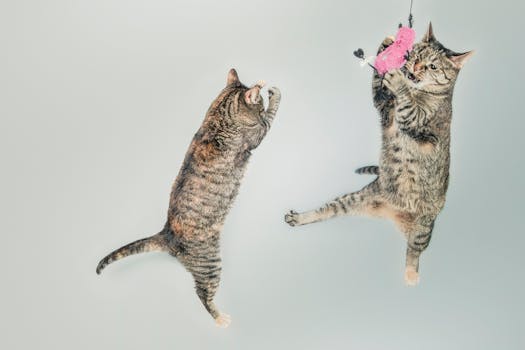
Cat's Longest Recorded Jump Ever Set
Did you know a cat once jumped 7 feet 2.5 inches in the air? What's the physics behind it?
Cat Sleep Patterns During Daylight Saving
Discover the shocking truth about your cat's sleep schedule during daylight saving.