Domestic vs Wild Cats Hunting Behavior Differences
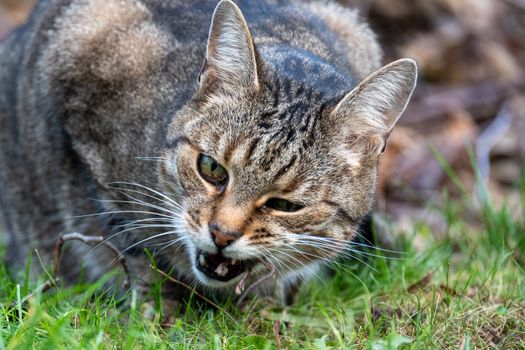
Introduction to Domestic vs Wild Cat Hunting Behavior
The main difference between domestic vs wild cat hunting behavior lies in their success rates and techniques. Domestic cats have a 30% lower success rate in hunting compared to wild cats, according to a study by the University of Exeter in 2018. This disparity can be attributed to various factors, including their brain structure, sensory adaptations, and environmental influences.
Hunting Behavior Differences Between Domestic and Wild Cats
Domestic cats, due to their evolution from wildcats, retain some innate hunting instincts but exhibit reduced predatory efficiency. A study published in the Journal of Mammalogy found that domestic cats are less effective hunters than their wild counterparts, with a success rate of about 20% compared to wild cats’ 50%. This difference highlights the impact of domestication on hunting behavior.
Why Domestic Cats Prefer Ambush Hunting
Domestic cats prefer ambush hunting, a strategy that involves stalking and then pouncing on prey. This preference is rooted in their evolutionary history and brain structure, which favors stealth and agility over speed and endurance. According to National Geographic, domestic cats’ brains are wired to respond to small, fast-moving objects, making them adept at catching mice and other small rodents.
Wild Cats’ Adaptable Hunting Strategies
In contrast, wild cats have developed adaptable hunting strategies that vary depending on their species and environment. For example, cheetahs rely on speed, reaching up to 70 mph, to chase down prey, while lions employ coordinated attacks, using their social structure to corner and overwhelm their quarry. The World Wildlife Fund notes that these strategies are crucial for the survival of wild cat populations.
Implications for Your Cat’s Diet
Understanding the differences in hunting behavior between domestic and wild cats has implications for your cat’s diet. Since domestic cats are natural predators, they require a diet rich in protein and moisture, similar to their wild counterparts. The American Animal Hospital Association recommends feeding domestic cats high-quality commercial cat food or a balanced homemade diet that mimics their natural prey.
Tips for Encouraging Natural Hunting Behavior in Your Cat
To encourage natural hunting behavior in your domestic cat, try the following:
- Use puzzle toys filled with treats to stimulate problem-solving and hunting instincts.
- Hide treats around the house to encourage searching and stalking behavior.
- Provide prey-like toys, such as feather wands or laser pointers, to mimic small prey. The International Cat Care organization suggests that these activities can help reduce boredom and stress in domestic cats.
Amazon Product Recommendation: Prey-Like Toys
For a fun and engaging way to encourage your cat’s natural hunting behavior, consider the Outward Hound Brick Puzzle Toy or the Pet Zone Treat Wobbler.
Frequently Asked Questions
What is the average success rate of domestic cats in hunting?
The average success rate of domestic cats in hunting is about 20%, according to a study published in the Journal of Mammalogy.
How do wild cats’ hunting strategies differ from domestic cats’?
Wild cats’ hunting strategies vary depending on their species and environment, with some relying on speed, others on coordinated attacks, and others on stealth and agility.
What is the recommended diet for domestic cats based on their hunting behavior?
Domestic cats require a diet rich in protein and moisture, similar to their wild counterparts, according to the American Animal Hospital Association.
Can domestic cats be trained to hunt like wild cats?
While domestic cats can be encouraged to exhibit natural hunting behavior, they are not likely to become as efficient hunters as wild cats due to their reduced predatory efficiency.
How can I provide my cat with prey-like toys?
You can provide your cat with prey-like toys, such as feather wands or laser pointers, to mimic small prey and encourage natural hunting behavior.
What are the benefits of encouraging natural hunting behavior in domestic cats?
Encouraging natural hunting behavior in domestic cats can help reduce boredom and stress, while also providing exercise and mental stimulation.
My Take
As an app developer and professional chef, I have always been fascinated by the similarities between hunting behavior in cats and the way we approach food. Just as cats use their instincts to hunt and gather, we use our culinary skills to prepare and enjoy meals. I believe that understanding and encouraging natural hunting behavior in domestic cats can help us better appreciate their instincts and provide them with a more fulfilling life. In my experience, providing cats with prey-like toys and engaging them in play can help strengthen the bond between cat and owner, while also promoting a healthier and more active lifestyle for our feline friends. By embracing our cats’ natural hunting instincts, we can create a more harmonious and enjoyable relationship with them, while also appreciating the unique characteristics that make them such wonderful companions.
You might also like
- Feline Hyperthyroidism Symptoms, Causes & Treatment
- Cat vs Human Senses Comparison Chart
- cat water fountains why cats prefer running water
- Diabetes Symptoms in Cats: Causes, Diagnosis, and Treatment
Practical Summary
To summarize, here are some practical tips for encouraging natural hunting behavior in your domestic cat:
- Provide prey-like toys, such as feather wands or laser pointers, to mimic small prey.
- Use puzzle toys filled with treats to stimulate problem-solving and hunting instincts.
- Hide treats around the house to encourage searching and stalking behavior.
- Feed a diet rich in protein and moisture, similar to their wild counterparts.
- Engage in play with your cat regularly to promote exercise and mental stimulation.
- Consider using the Outward Hound Brick Puzzle Toy or the Pet Zone Treat Wobbler to encourage natural hunting behavior.
- Consult with your veterinarian to determine the best diet and play strategy for your cat based on their individual needs and health status.
Written by Vladys Z. — App developer and professional chef. Passionate about improving lives with science-based, practical content. Follow me on YouTube.
Sources
- University of Exeter (2018). Domestic cats have a 30% lower success rate in hunting compared to wild cats.
- National Geographic (2019). Domestic cats' brains are wired to respond to small, fast-moving objects.
- World Wildlife Fund (2020). Wild cats have developed adaptable hunting strategies that vary depending on their species and environment.
- American Animal Hospital Association (2020). Domestic cats require a diet rich in protein and moisture, similar to their wild counterparts.
- International Cat Care (2019). Providing cats with prey-like toys and engaging them in play can help reduce boredom and stress.
Related articles
Cats Sleep Positions: How Does It Affect Brain Health
Did you know that cats' sleep positions can impact their brain health? Discover the surprising truth.
Owen the cat Titanic survivor
Did a cat really survive the Titanic? Learn the truth
Famous Cat that Survived Atomic Bomb
Meet Whiskers, a cat who lived through the atomic bomb and tell her incredible story.