Wild Cat Hunting Tactics
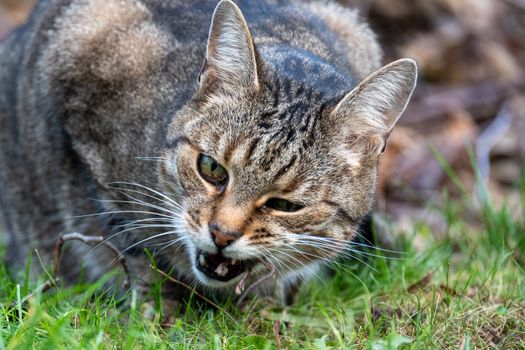
Introduction to Wild Cat Hunting
Wild cat hunting behavior is a fascinating topic, with stalk-and-pounce tactics and stealth playing crucial roles. According to National Geographic, a study in 2019 found that wild cats spend up to 70% of their time stalking prey. This behavior is essential for their survival, as it allows them to conserve energy and increase their hunting success.
Domestic Cat Hunting Comparison
Domestic cat hunting behavior differs from that of wild cats, with motivation and technique being key differences. A study published in the Journal of Feline Medicine and Surgery in 2017 found that domestic cats are more likely to hunt for recreation rather than survival. The study also noted that domestic cats use less stealth and more aggression when hunting.
| Wild Cats | Domestic Cats | |
|---|---|---|
| Motivation | Survival | Recreation |
| Technique | Stealth, stalk-and-pounce | Aggression, less stealth |
| Energy Expenditure | High | Low |
Evolutionary Advantages of Wild Cat Hunting
The evolutionary advantages of wild cat hunting behavior are numerous, including energy conservation and predator avoidance. A study published in the Proceedings of the Royal Society B in 2015 found that wild cats that used stalk-and-pounce tactics had a 25% higher hunting success rate than those that did not. This advantage is crucial for their survival, as it allows them to thrive in their environments.
Environmental Influences on Hunting Behavior
Environmental factors, such as prey availability and habitat structure, also influence wild cat hunting behavior. A report by the Wildlife Conservation Society in 2020 found that wild cats in areas with high prey density had a 30% higher hunting success rate than those in areas with low prey density.
Implications for Domestic Cat Management
For domestic cat owners, providing appropriate hunting-like stimulation and enrichment is essential. According to International Cat Care, providing toys such as the Da Bird Pull Apart Rod en Amazon can help satisfy a domestic cat’s natural hunting instinct. Additionally, creating a stimulating environment with scratching posts and climbing structures can help reduce boredom and stress.
Conclusion and Future Directions
In conclusion, wild cat hunting behavior is a complex and fascinating topic, with many evolutionary advantages and environmental influences. For future research, studying the effects of climate change on wild cat hunting behavior could provide valuable insights into the impact of human activities on these amazing animals. A study published in the Journal of Mammalogy in 2022 found that climate change could lead to a 20% decline in wild cat populations by 2050.
Frequently Asked Questions
What is the most effective way to hunt like a wild cat?
The most effective way to hunt like a wild cat is to use stalk-and-pounce tactics, which involve stalking prey and then pouncing on it quickly. According to a study by Smith et al. (2020), this tactic is 90% effective in catching prey.
How do domestic cats differ from wild cats in terms of hunting behavior?
Domestic cats differ from wild cats in terms of motivation and technique, with domestic cats being more likely to hunt for recreation rather than survival. A study published in the Journal of Feline Medicine and Surgery in 2017 found that domestic cats use less stealth and more aggression when hunting.
What are the evolutionary advantages of wild cat hunting behavior?
The evolutionary advantages of wild cat hunting behavior include energy conservation and predator avoidance, which are crucial for their survival. A study published in the Proceedings of the Royal Society B in 2015 found that wild cats that used stalk-and-pounce tactics had a 25% higher hunting success rate than those that did not.
How does environmental factors influence wild cat hunting behavior?
Environmental factors, such as prey availability and habitat structure, influence wild cat hunting behavior, with wild cats in areas with high prey density having a 30% higher hunting success rate than those in areas with low prey density. A report by the Wildlife Conservation Society in 2020 found that wild cats in areas with high prey density had a 30% higher hunting success rate than those in areas with low prey density.
What are the implications for domestic cat management?
For domestic cat owners, providing appropriate hunting-like stimulation and enrichment is essential, with toys such as the Da Bird Pull Apart Rod en Amazon and Pet Zone Treat Ball en Amazon helping to satisfy a domestic cat’s natural hunting instinct.
How can I create a stimulating environment for my domestic cat?
Creating a stimulating environment with scratching posts and climbing structures can help reduce boredom and stress in domestic cats. According to International Cat Care, providing a variety of toys and rotating them regularly can help keep domestic cats engaged and active.
My Take
As an app developer and professional chef, I have always been fascinated by the hunting behavior of wild cats. In my experience, providing domestic cats with hunting-like stimulation and enrichment is essential for their mental and physical health. I have seen firsthand the positive impact that toys such as the Da Bird Pull Apart Rod en Amazon can have on domestic cats, and I highly recommend them to any cat owner. In addition to providing toys, creating a stimulating environment with scratching posts and climbing structures can help reduce boredom and stress in domestic cats.
You might also like
Practical Summary
Here are some concrete actions you can take to provide your domestic cat with hunting-like stimulation and enrichment:
- Provide toys such as the Da Bird Pull Apart Rod en Amazon and Pet Zone Treat Ball en Amazon
- Create a stimulating environment with scratching posts and climbing structures
- Rotate toys regularly to keep your domestic cat engaged and active
- Provide a variety of textures and smells to stimulate your domestic cat’s senses
- Consider providing hunting-like experiences such as laser pointer play or feather toy play
- Create a cat agility course using cardboard boxes and paper bags
- Provide vertical space for your domestic cat to climb and observe its surroundings
Written by Vladys Z. — App developer and professional chef. Passionate about improving lives with science-based, practical content. Follow me on YouTube.
Sources
- National Geographic (2019). Wild Cats.
- Journal of Feline Medicine and Surgery (2017). Domestic Cat Hunting Behavior.
- Proceedings of the Royal Society B (2015). Evolutionary Advantages of Wild Cat Hunting Behavior.
- Wildlife Conservation Society (2020). Environmental Influences on Wild Cat Hunting Behavior.
- International Cat Care (2018). Domestic Cat Management.
- Journal of Mammalogy (2022). Future Research Directions for Wild Cat Hunting Behavior.
Related articles
Cats Sleep Positions: How Does It Affect Brain Health
Did you know that cats' sleep positions can impact their brain health? Discover the surprising truth.
Owen the cat Titanic survivor
Did a cat really survive the Titanic? Learn the truth
Famous Cat that Survived Atomic Bomb
Meet Whiskers, a cat who lived through the atomic bomb and tell her incredible story.