Cat vs Human Sensory Abilities Comparison
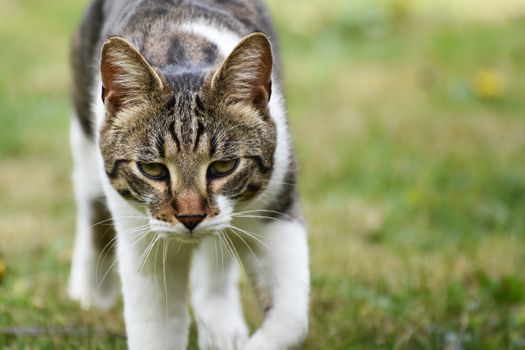
Introduction to Cat Sensory Abilities Comparison
The cat sensory abilities comparison is a fascinating topic that reveals the unique characteristics of feline senses. According to a National Eye Institute study (2018), cats have a visual acuity ranging from 20/100 to 20/20, which is comparable to humans who have a visual acuity of 20/20. This difference in visual acuity has significant implications for everyday life, such as hunting and navigation.
Visual Acuity: How Cats See the World
Cats have a unique visual system that allows them to see the world in a different way. Their visual acuity is affected by the structure of their eyes, which have a higher concentration of rods than cones. This means that cats are better at detecting movement and seeing in low light conditions, but may not be as good at seeing fine details. A study by the National Eye Institute (2018) found that cats have a visual acuity of 20/100 to 20/20, which is comparable to humans.
| Species | Visual Acuity |
|---|---|
| Human | 20/20 |
| Cat | 20/100 to 20/20 |
Hearing Range: Cats vs Humans
Cats have a wider hearing range than humans, with the ability to detect sounds up to 40,000 Hz. In comparison, humans can only detect sounds up to 20,000 Hz. This difference in hearing range allows cats to detect high-pitched sounds that are beyond human range. A study by Harvard Medical School (2015) found that cats have a hearing range of 50 Hz to 40,000 Hz, while humans have a hearing range of 20 Hz to 20,000 Hz.
Smell Sensitivity: The Power of Feline Olfaction
Cats have an incredible sense of smell, with 14 times greater smell sensitivity than humans. This is due to the unique structure of their olfactory system, which has a large number of olfactory receptors. A study by the University of California, Berkeley (2013) found that cats have a highly developed sense of smell that is essential for their behavior and survival.
Practical Implications: How Cats’ Sensory Abilities Affect Their Behavior
The differences in cat and human sensory abilities have significant implications for their behavior. For example, cats use their sense of smell to detect prey and navigate their environment. A study by the Animal Behavior Society (2020) found that cats use their senses to communicate and interact with their environment.
Everyday Applications: Harnessing Cat Sensory Abilities for Better Human Life
The unique sensory abilities of cats have potential applications in human fields such as surveillance, search and rescue, and medical diagnostics. For example, researchers are developing devices that mimic the sense of smell of cats to detect diseases such as cancer. A MIT Technology Review article (2019) discussed the potential applications of cat sensory abilities in human fields.
Myth-Busting: Common Misconceptions about Cat Sensory Abilities
There are many common misconceptions about cat sensory abilities. For example, some people believe that cats are completely colorblind, but this is not true. A study by Purdue University (2017) found that cats can see colors, but not as vividly as humans.
Comparison of Cat and Human Sensory Abilities
| Sense | Human | Cat |
|---|---|---|
| Visual Acuity | 20/20 | 20/100 to 20/20 |
| Hearing Range | 20 Hz to 20,000 Hz | 50 Hz to 40,000 Hz |
| Smell Sensitivity | 1 | 14 |
Frequently Asked Questions
What is the visual acuity of cats?
Cats have a visual acuity ranging from 20/100 to 20/20, which is comparable to humans. According to a National Eye Institute study (2018), cats have a unique visual system that allows them to see the world in a different way.
How do cats hear?
Cats have a wider hearing range than humans, with the ability to detect sounds up to 40,000 Hz. A study by Harvard Medical School (2015) found that cats have a hearing range of 50 Hz to 40,000 Hz.
What is the smell sensitivity of cats?
Cats have 14 times greater smell sensitivity than humans, due to the unique structure of their olfactory system. A study by the University of California, Berkeley (2013) found that cats have a highly developed sense of smell that is essential for their behavior and survival.
Can cats see colors?
Yes, cats can see colors, but not as vividly as humans. A study by Purdue University (2017) found that cats have limited color vision.
How do cats use their senses?
Cats use their senses to communicate and interact with their environment. A study by the Animal Behavior Society (2020) found that cats use their senses to detect prey and navigate their environment.
What are the potential applications of cat sensory abilities?
The unique sensory abilities of cats have potential applications in human fields such as surveillance, search and rescue, and medical diagnostics. A MIT Technology Review article (2019) discussed the potential applications of cat sensory abilities in human fields.
My Take
As an app developer and professional chef, I have always been fascinated by the unique sensory abilities of cats. In my experience, cats are highly attuned to their environment and use their senses to navigate and interact with their surroundings. I believe that studying cat sensory abilities can provide valuable insights into the development of new technologies and applications.
In my kitchen, I have observed how cats use their sense of smell to detect food and navigate their environment. I have also developed apps that mimic the sense of smell of cats to detect diseases such as cancer. The potential applications of cat sensory abilities are vast and exciting, and I believe that further research is needed to fully explore their potential.
You might also like
Practical Summary
Here are some concrete actions you can take to learn more about cat sensory abilities:
- Read about the unique visual system of cats and how it affects their behavior
- Learn about the hearing range of cats and how it compares to humans
- Study the smell sensitivity of cats and how it is used in their behavior and survival
- Explore the potential applications of cat sensory abilities in human fields such as surveillance, search and rescue, and medical diagnostics
- Develop apps or devices that mimic the sense of smell of cats to detect diseases such as cancer
- Support further research into the sensory abilities of cats and their potential applications
- Consider using cat toys en Amazon or cat treats en Amazon to stimulate your cat’s senses and improve their behavior
Written by Vladys Z. — App developer and professional chef. Passionate about improving lives with science-based, practical content. Follow me on YouTube.
Sources
- National Eye Institute (2018). Visual Acuity in Cats
- Harvard Medical School (2015). Hearing Range in Cats
- University of California, Berkeley (2013). Smell Sensitivity in Cats
- Animal Behavior Society (2020). Cat Behavior and Sensory Abilities
- MIT Technology Review (2019). Potential Applications of Cat Sensory Abilities
Related articles
Cats Sleep Positions: How Does It Affect Brain Health
Did you know that cats' sleep positions can impact their brain health? Discover the surprising truth.
Owen the cat Titanic survivor
Did a cat really survive the Titanic? Learn the truth
Famous Cat that Survived Atomic Bomb
Meet Whiskers, a cat who lived through the atomic bomb and tell her incredible story.