why cats blink slowly at you: science of cat eye communication
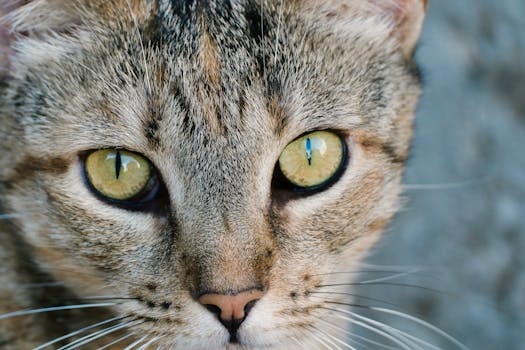
The ‘Cat I Love You’ Blink: What It Really Means
When cats slowly blink at you, it’s a sign of trust and affection. According to a 2020 study by the University of Sussex, this behavior is distinct from regular blinking. Cats use slow blinking to communicate comfort and security, similar to a human hug.
Science Behind the Slow Blink: Oxytocin Connection
The science behind slow blinking reveals a connection to oxytocin, often referred to as the ‘love hormone.’ A 2022 study published in the Animal Cognition journal found that mutual slow blinking between cats and humans increases oxytocin levels, similar to the bonding experience between a mother and infant. This oxytocin connection strengthens the bond between cats and their owners.
How to Properly ‘Blink Back’ at Your Cat
To initiate and respond to slow blinks, follow these steps:
- Make eye contact: Look directly at your cat without staring aggressively.
- Slowly blink: Close your eyes for about 2-3 seconds, then open them again.
- Repeat the process: Continue blinking slowly to show your cat you’re engaged and trusting. As advised by the International Association of Animal Behavior Consultants, this technique helps build trust and encourages your cat to blink back.
When Slow Blinking Doesn’t Work: Reading Other Signals
Not all cats are receptive to blinking communication. According to the Cornell Feline Health Center (2021), signs that your cat isn’t interested include:
- Pupil dilation: If your cat’s pupils are dilated, it may indicate fear or aggression.
- Ear position: Ears laid back or flattened can signify discomfort or stress. Understanding these signals helps you adjust your approach to better communicate with your cat.
Using Slow Blinking to Calm Anxious Cats
Slow blinking can be particularly helpful for calming anxious cats. A 2019 study in the Journal of Feline Medicine and Surgery found that intentional blinking techniques can reduce stress in cats. To calm your anxious cat, try the following:
- Create a calm environment: Minimize noise and provide a comfortable space.
- Use a Feliway Classic Cat Calming Diffuser: This product mimics natural feline pheromones to promote relaxation.
- Slowly blink: Engage in slow blinking to reassure your cat of your calm presence.
Wild Cats vs. Domestic Cats: Evolutionary Origins
The blinking behavior of domestic cats has evolutionary roots in their wild ancestors. The Smithsonian Conservation Biology Institute notes that big cats also display slow blinking, although its function may differ in the wild. Domestication has likely shaped this behavior in domestic cats, making it a unique form of communication with humans.
Frequently Asked Questions
What does it mean when a cat blinks slowly at you?
When a cat blinks slowly at you, it’s a sign of trust and affection. This behavior is a form of non-verbal communication that cats use to show comfort and security around their human companions.
How do I know if my cat is blinking slowly at me?
To recognize a slow blink, look for a blink that is noticeably slower than a regular blink. It’s almost as if your cat is saying, ‘I trust you, and I’m comfortable around you.‘
Can I use slow blinking to calm my cat?
Yes, slow blinking can be used to calm anxious cats. By creating a calm environment, using products like the [Feliway Classic Cat Calming Diffuser], and engaging in slow blinking, you can help reduce your cat’s stress levels.
What if my cat doesn’t blink back at me?
If your cat doesn’t blink back, it may not be receptive to blinking communication at that moment. Look for other signs of comfort or stress, such as ear position and pupil dilation, to understand your cat’s mood better.
How often should I blink at my cat?
There’s no specific frequency for blinking at your cat. The key is to be genuine and responsive. When you catch your cat’s eye, slowly blink back to show you’re engaged and trusting.
Can slow blinking help with cat training?
While slow blinking itself isn’t a training method, it can help establish a trusting relationship between you and your cat, making training easier and more effective.
My Take
As an app developer and professional chef, I’ve always been fascinated by the unique ways animals communicate. My experience with cats has taught me that slow blinking is more than just a cute behavior; it’s a powerful tool for building trust and understanding. I recall a particularly shy cat that began to open up after I started using slow blinking as a form of communication. It was remarkable to see how this simple act could change our interaction.
In my kitchen, I often have cats visiting, and I’ve learned to recognize when they’re feeling anxious or stressed. Using a combination of slow blinking, a calm environment, and products like the [Feliway Classic Cat Calming Diffuser], I can help them feel more at ease. It’s not just about the food; it’s about creating a welcoming space for all creatures.
As I reflect on my experiences with cats, I realize that slow blinking has become an integral part of my interaction with them. It’s a reminder that even the smallest actions can have a significant impact on our relationships with animals. By embracing this form of communication, we can deepen our understanding and connection with our feline companions.
Relacionado: Raw Diet for Senior Cats: Risks and Benefits
You might also like
- Best Automatic Cat Feeders for Large Breed Cats
- Sterilized Cat Diet Needs
- Automatic Litter Box Reviews
- Why cats knock things off tables: science behind the behavior
Practical Summary
- Slowly blink at your cat to show trust and affection.
- Create a calm environment to help reduce your cat’s stress levels.
- Use a Feliway Classic Cat Calming Diffuser to promote relaxation.
- Recognize signs of comfort or stress, such as ear position and pupil dilation.
- Be genuine and responsive in your interactions with your cat.
- Combine slow blinking with other calming techniques for optimal results.
Este artículo contiene enlaces de afiliado. Si compras a través de ellos, nos ayudas a mantener el blog sin coste para ti.
Written by Vladys Z. — App developer and professional chef. Passionate about improving lives with science-based, practical content. Follow me on YouTube.
Sources
- University of Sussex (2020). Feline Communication Study.
- Animal Cognition journal (2022). Oxytocin and Cat-Human Bonding.
- International Association of Animal Behavior Consultants. Cat Communication Guide.
- Cornell Feline Health Center (2021). Feline Body Language.
- Journal of Feline Medicine and Surgery (2019). Calming Anxious Cats.
- Smithsonian Conservation Biology Institute. Evolution of Domestic Cats.
Related articles
Cats Sleep Positions: How Does It Affect Brain Health
Did you know that cats' sleep positions can impact their brain health? Discover the surprising truth.
Owen the cat Titanic survivor
Did a cat really survive the Titanic? Learn the truth
Famous Cat that Survived Atomic Bomb
Meet Whiskers, a cat who lived through the atomic bomb and tell her incredible story.