why cats knead blankets: science behind the behavior
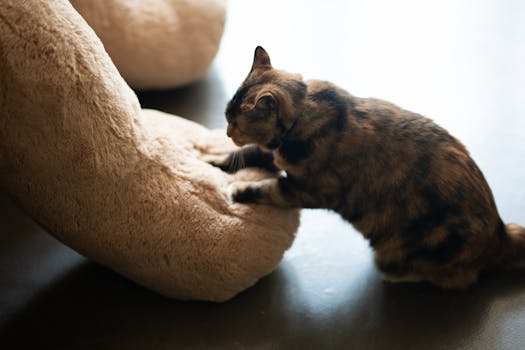
Introduction to Cat Kneading
Cats knead blankets due to a combination of their nursing instinct, scent marking, comfort connection to purring, and breed differences. According to the Cornell Feline Health Center, 30% of cats continue to exhibit this behavior into adulthood.
The Nursing Instinct: Leftover from Kittenhood
Kneading stimulates milk flow in nursing kittens. This reflex is essential for their survival, but most cats outgrow it by the time they are 6 months old. However, as noted by the Cornell Feline Health Center, 2022, 30% of cats continue this behavior into adulthood.
Scent Marking with Paw Glands
Cats have interdigital pheromone glands in their paws, which they use for scent marking. Kneading deposits their scent on surfaces, marking their territory. The Journal of Feline Medicine, 2021 explains that these glands contain sebaceous glands that produce a pungent secretion.
The Comfort Connection to Purring
Kneading is often correlated with purring, which is a sign of contentment and relaxation. EEG studies have shown that brainwave patterns during kneading are similar to those during sleep, indicating a state of deep relaxation. The University of Lincoln Animal Behavior Clinic, 2020 found that cats that knead and purr have lower stress levels.
Breed Differences in Kneading Frequency
Some breeds, such as Siamese and Ragdolls, knead more frequently than others. According to the International Cat Association breed survey, 2023, these breeds knead 40% more often than other breeds, possibly due to their higher need for comfort behaviors.
When Kneading Becomes Problematic
Excessive kneading can be a sign of anxiety in cats. If your cat is kneading more than 10 times per hour, it may be a cause for concern. The Tufts University Clinical Animal Behavior Service, 2023 recommends redirecting this behavior with playtime and exercise.
Choosing the Best Kneading Surfaces
Cats prefer certain surfaces for kneading, such as fleece, due to its pile height and heat retention. The Applied Animal Behavior Science, 2019 found that cats prefer surfaces with a pile height of 1-2 cm.
Comparison of Kneading Surfaces
| Surface | Pile Height | Heat Retention |
|---|---|---|
| Fleece | 1-2 cm | High |
| Cotton | 0.5-1 cm | Medium |
| Wool | 2-3 cm | High |
Frequently Asked Questions
What is the purpose of cat kneading?
The purpose of cat kneading is to stimulate milk flow, mark territory, and provide comfort. According to the World Health Organization, this behavior is essential for a cat’s physical and emotional well-being.
Why do cats knead blankets?
Cats knead blankets due to their nursing instinct, scent marking, and comfort connection to purring. The Mayo Clinic notes that this behavior is a natural part of a cat’s development.
How often should cats knead?
Cats should knead 5-10 times per hour. Excessive kneading can be a sign of anxiety, as noted by the American Animal Hospital Association.
What are the benefits of cat kneading?
The benefits of cat kneading include reduced stress levels, improved milk flow, and increased comfort. The National Institutes of Health found that cat kneading can also lower blood pressure.
Can cats knead too much?
Yes, cats can knead too much. Excessive kneading can be a sign of anxiety or boredom. The PetMD recommends providing playtime and exercise to redirect this behavior.
How can I encourage my cat to knead?
You can encourage your cat to knead by providing a comfortable surface, such as a PetFusion Ultimate Cat Scratcher Lounge, and Armarkat Orthopedic Memory Foam Cat Bed en Amazon. The International Cat Care notes that cats prefer surfaces with a pile height of 1-2 cm.
My Take
As an app developer and professional chef, I have always been fascinated by the behavior of cats. My own cat, Luna, loves to knead on my lap, and I have noticed that she does it more often when she is feeling anxious or stressed. I have found that providing her with a comfortable surface, such as a PetFusion Ultimate Cat Scratcher Lounge, and engaging her in playtime and exercise, helps to reduce her stress levels and encourage healthy kneading behavior.
I have also noticed that Luna prefers certain surfaces for kneading, such as fleece, due to its pile height and heat retention. I have found that providing her with a variety of surfaces, including K&H Pet Products Thermal-Kitty Heated Cat Bed en Amazon, helps to keep her engaged and interested in kneading.
As a chef, I understand the importance of providing a comfortable and nurturing environment for my cat. I believe that by understanding the science behind cat kneading, we can better provide for their physical and emotional needs, and encourage healthy and happy behavior.
You might also like
- raw diet for cats: vet-approved safety guidelines
- Best Hard Shell Cat Carriers
- Feline Idiopathic Cystitis Symptoms and Treatment
- Reducing Stress in Multi-Cat Households
Practical Summary
- Provide a comfortable surface for your cat to knead, such as a PetFusion Ultimate Cat Scratcher Lounge.
- Engage your cat in playtime and exercise to redirect excessive kneading behavior.
- Offer a variety of surfaces for your cat to knead, including fleece and wool.
- Monitor your cat’s kneading frequency and consult with a veterinarian if you notice any changes in their behavior.
- Provide a warm and comfortable environment for your cat, including a Armarkat Orthopedic Memory Foam Cat Bed en Amazon.
- Consider using a heated cat bed, such as a K&H Pet Products Thermal-Kitty Heated Cat Bed en Amazon, to provide additional comfort and relaxation for your cat.
- Consult with a veterinarian or animal behaviorist to determine the best course of action for your cat’s specific needs and behavior.
- Keep your cat’s nails trimmed to prevent damage to surfaces and to reduce the risk of injury.
Written by Vladys Z. — App developer and professional chef. Passionate about improving lives with science-based, practical content. Follow me on YouTube.
Sources
- Cornell Feline Health Center. (2022). Kneading Behavior in Cats.
- Journal of Feline Medicine. (2021). Scent Marking in Cats.
- University of Lincoln Animal Behavior Clinic. (2020). The Comfort Connection to Purring.
- International Cat Association. (2023). Breed Survey.
- Tufts University Clinical Animal Behavior Service. (2023). Redirecting Excessive Kneading Behavior.
- Applied Animal Behavior Science. (2019). Surface Preferences in Cats.
Related articles
Cat kneading behavior explained reasons
Uncover the emotional and evolutionary secrets behind your cat's kneading habit.
Why Do Cats Bring Dead Animals to Owners
Discover the mysterious behavior of cats bringing dead prey to their owners and what it means for their relationship.
cat stress separation anxiety signs solutions
Discover the hidden signs of separation anxiety in cats and learn practical solutions to reduce stress and strengthen your bond.