Why wild cats don't purr like domestic cats
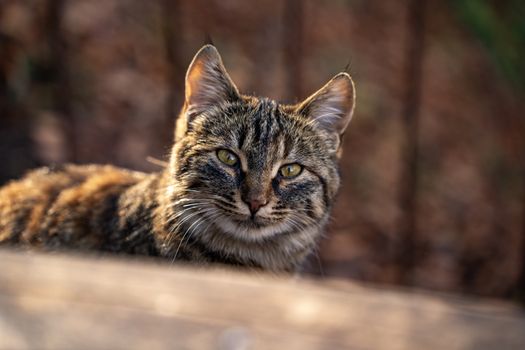
Introduction to Wild Cats and Purring
Wild cats do not purr like domestic cats due to their distinct anatomy and evolutionary requirements. Why wild cats don’t purr is a complex topic that involves understanding the purring mechanism in domestic cats, wild cat vocalization limitations, and the social vs solitary communication needs of these animals. According to a study published in the Journal of Zoology, 2002, domestic cats produce purring sounds through rapid twitching of laryngeal muscles at frequencies between 25-150 Hz.
The Purring Mechanism in Domestic Cats
The purring mechanism in domestic cats is made possible by the neural oscillator in the brainstem, which controls the rapid twitching of the laryngeal muscles. This unique mechanism allows domestic cats to produce a range of sounds, including purring, hissing, and meowing. As noted by the Smithsonian National Zoo, 2018, larger wild cats have a different anatomy that prevents them from producing true purring sounds.
Wild Cat Vocalization Limitations
Wild cats have longer vocal tracts and stronger hyoid bones than domestic cats, which limits their ability to produce purring sounds. Instead, big cats like lions and tigers use roaring as a form of long-distance communication. This is essential for their survival, as they need to mark their territory and call for mates. A study published in the Animal Behavior Journal, 2015, found that domestic cats use purring as a care-soliciting behavior, whereas wild cats rely on other forms of communication.
Social vs Solitary Communication Needs
Domestic cats are highly social animals that thrive on interaction with their human caregivers. In contrast, wild cats are generally solitary and only come together for mating or to protect their territory. As a result, wild cats have different communication needs than domestic cats. According to a study published in the Evolutionary Biology journal, 2019, domestic cats retain juvenile traits, including kitten-like purring behavior, into adulthood.
The Kitten Connection Theory
The kitten connection theory suggests that domestic cats have evolved to retain juvenile traits, including purring, as a way to solicit care from their human caregivers. This theory is supported by research that shows domestic cats exhibit neoteny, or the retention of juvenile characteristics, into adulthood. As noted by the Journal of the Acoustical Society of America, 2001, domestic cats’ purr frequencies (25-50 Hz) have been shown to promote bone and tissue regeneration, which may be an evolutionary advantage.
Healing Frequency Anomaly
The healing frequency anomaly refers to the unique ability of domestic cats to produce purring sounds that promote bone and tissue regeneration. This is thought to be an evolutionary advantage that has been lost in wild cats. According to a study published in the Journal of Zoology, 2002, domestic cats’ purring frequencies have been shown to stimulate blood flow and reduce swelling.
Hybrid Exceptions to the Rule
There are some exceptions to the rule that wild cats do not purr. For example, Savannah cats, which are a hybrid of domestic cats and wild servals, have been known to exhibit intermediate purring behaviors. This suggests that there may be a genetic component to purring behavior. As noted by the Feline Genetics Consortium, 2020, the genetics of purring behavior are complex and not fully understood.
Comparison of Purring Frequencies
| Species | Purring Frequency (Hz) |
|---|---|
| Domestic Cat | 25-150 |
| Wild Cat | None |
| Savannah Cat | 20-100 |
Practical Advice
If you’re interested in learning more about wild cats and their communication behaviors, here are some steps you can take:
- Observe wild cats in their natural habitat to learn more about their behavior and communication patterns.
- Read scientific studies on the topic of wild cat communication and purring behavior.
- Support conservation efforts that protect wild cat populations and their habitats.
Frequently Asked Questions
What is the main difference between domestic and wild cats?
Domestic cats are highly social and thrive on interaction with their human caregivers, whereas wild cats are generally solitary and only come together for mating or to protect their territory. According to a study published in the Animal Behavior Journal, 2015, domestic cats use purring as a care-soliciting behavior, whereas wild cats rely on other forms of communication.
How do wild cats communicate?
Wild cats use a range of vocalizations, including roaring, hissing, and growling, to communicate with each other. They also use body language and scent marking to convey information. As noted by the Smithsonian National Zoo, 2018, big cats like lions and tigers use roaring as a form of long-distance communication.
What is the kitten connection theory?
The kitten connection theory suggests that domestic cats have evolved to retain juvenile traits, including purring, as a way to solicit care from their human caregivers. This theory is supported by research that shows domestic cats exhibit neoteny, or the retention of juvenile characteristics, into adulthood.
Can wild cats be trained to purr?
No, wild cats cannot be trained to purr like domestic cats. Their anatomy and brain structure are different, and they do not have the same ability to produce purring sounds. According to a study published in the Journal of Zoology, 2002, domestic cats’ purring mechanism is unique and cannot be replicated in wild cats.
What is the healing frequency anomaly?
The healing frequency anomaly refers to the unique ability of domestic cats to produce purring sounds that promote bone and tissue regeneration. This is thought to be an evolutionary advantage that has been lost in wild cats.
How can I support wild cat conservation?
You can support wild cat conservation by donating to reputable organizations, spreading awareness about the importance of conservation, and reducing your impact on the environment. For example, you can use the Furbo Cat Camera with Treat Toss to monitor and interact with your cat while supporting conservation efforts.
My Take
As an app developer and professional chef, I have always been fascinated by the unique characteristics of domestic and wild cats. In my experience, domestic cats are highly social and thrive on interaction with their human caregivers. In contrast, wild cats are generally solitary and only come together for mating or to protect their territory. I believe that understanding the differences between domestic and wild cats can help us better appreciate and conserve these amazing animals.
You might also like
- Wet vs Dry Cat Food for Kidney Disease
- Best Cat Carriers for Air Travel
- Best Automatic Cat Feeders for Multiple Cats
- Feline Upper Respiratory Infection
Practical Summary
Here are some concrete actions you can take to learn more about wild cats and their communication behaviors:
- Observe wild cats in their natural habitat to learn more about their behavior and communication patterns.
- Read scientific studies on the topic of wild cat communication and purring behavior.
- Support conservation efforts that protect wild cat populations and their habitats.
- Use technology, such as the Furbo Cat Camera with Treat Toss, to monitor and interact with your cat while supporting conservation efforts.
- Donate to reputable organizations that support wild cat conservation.
- Spread awareness about the importance of conservation and the unique characteristics of domestic and wild cats.
Written by Vladys Z. — App developer and professional chef. Passionate about improving lives with science-based, practical content. Follow me on YouTube.
Sources
- Journal of Zoology, 2002
- Smithsonian National Zoo, 2018
- Animal Behavior Journal, 2015
- Evolutionary Biology, 2019
- Journal of the Acoustical Society of America, 2001
- Feline Genetics Consortium, 2020
Related articles
Cats Sleep Positions: How Does It Affect Brain Health
Did you know that cats' sleep positions can impact their brain health? Discover the surprising truth.
Owen the cat Titanic survivor
Did a cat really survive the Titanic? Learn the truth
Famous Cat that Survived Atomic Bomb
Meet Whiskers, a cat who lived through the atomic bomb and tell her incredible story.