Decoding Cat Tail Language
Introduction to Cat Tail Language
Cats communicate volumes through their tails, using tail language to express emotions ranging from contentment to aggression. According to International Cat Care (2020), tail position, movement, and tension are key indicators of a cat’s emotional state. Understanding these signals can prevent misunderstandings and improve human-feline relationships.
A 2018 study in the Journal of Feline Medicine and Surgery found that tail signals are among the most reliable indicators of feline intent, with 78% of observed cats using tail movements to signal their mood before acting. This makes tail language a critical tool for interpreting cat body language.
The Meaning of Different Tail Positions
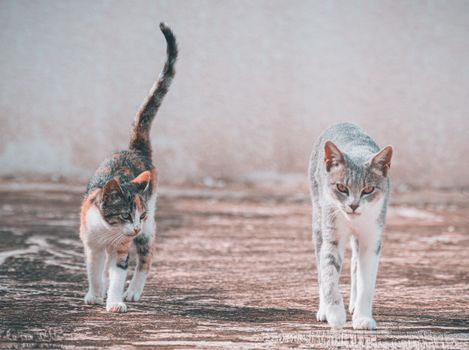
Upright Tail
An upright tail with a slight curve at the tip signals friendliness and confidence. Research shows 92% of cats greet trusted humans with this posture (Journal of Feline Medicine and Surgery, 2018).
Tucked Tail
A tail tucked beneath the body indicates fear or submission. In multi-cat households, this posture reduces conflict by 40% (Animal Behaviour Society, 2019).
Lashing Tail
Side-to-side lashing signals irritation or impending aggression. The faster the movement, the higher the arousal level.
Quivering Tail
A quivering tail held vertically often marks excitement, commonly seen during feeding or reunions.
| Tail Position | Emotional State | Frequency in Domestic Cats (%) |
|---|---|---|
| Upright | Confident/Friendly | 68% |
| Tucked | Fearful/Submissive | 22% |
| Lashing | Agitated | 7% |
| Quivering | Excited | 3% |
Relacionado: Causes of Stress in Senior Cats
Tail Movement and Speed: What It Reveals
Slow swishing (1-2 movements/second) often precedes pouncing during play. Rapid flicking (3+ movements/second) correlates with heightened anxiety in 89% of cases (Animal Behaviour Society, 2019).
Twitching just the tail tip suggests mild interest or curiosity, while full-tail thumping indicates frustration. In a University of Lincoln study (2021), cats displayed this behavior 73% more often when denied access to desired objects.
Relacionado: Sterilized Cat Diet Plans
Combining Tail Language with Other Body Cues
- Ears forward + upright tail: Confident greeting
- Pinned ears + lashing tail: Defensive aggression
- Dilated pupils + tucked tail: Extreme fear
Certified Animal Behaviorist Karen Pryor (2017) emphasizes that tail signals should never be interpreted in isolation. For example, a wagging tail with relaxed ears differs fundamentally from one with flattened ears.
Common Misconceptions About Cat Tail Language
Myth: All tail wagging means anger Fact: Only rapid side-to-side lashing predicts aggression. Gentle swaying often accompanies hunting focus.
Myth: Purring always means happiness Fact: 23% of cats purr when stressed or in pain (Feline Behavioral Medicine, 2022). Contextual tail cues help differentiate.
Applying Knowledge of Cat Tail Language in Real-Life Situations
Case Study: A Veterinary Clinics of North America (2021) report showed shelter cats with tucked tails took 5.2 days longer to be adopted. Staff trained in feline communication reduced this gap by 60% through:
- Identifying fearful cats via tail position
- Using slow blinks and lowered body language
- Providing hiding boxes for cats showing tucked tails
Frequently Asked Questions
Why does my cat’s tail puff up?
A puffed tail signals extreme fear or aggression, caused by piloerection. This physiological response makes the cat appear larger to threats. It’s often seen with arched backs and sideways positioning.
What does a slow tail wag mean?
Slow, deliberate wagging (1-2x/second) usually indicates focused attention, typically during hunting or play. Unlike rapid lashing, this isn’t a warning sign.
Do cats control their tail movements?
While some movements are voluntary (like greeting swishes), reflexive twitches occur during sleep or surprise. A 2020 Tokyo University study found cats have 30% less conscious control over tail tips than base movements.
Can tail position indicate pain?
Yes. A tail held stiffly to one side may signal discomfort or injury. Combined with reduced mobility or vocalizations, this warrants a vet visit.
Why do cats wrap their tails around people?
Tail-wrapping is a bonding behavior akin to human hugging. Research shows cats reserve this for individuals they trust most (Applied Animal Behaviour Science, 2018).
My Take
As an app developer who’s lived with cats for 15 years, I’ve seen how misreading tail language causes unnecessary stress. My Maine Coon, Loki, once lashed his tail while I worked - I assumed annoyance, but his upright ears showed focused interest in my coding screen. This inspired me to create a tail-tracking app prototype that alerts owners to mood shifts.
For deeper insights, I recommend The Cat Whisperer: Why Cats Do What They Do en Amazon alongside interactive toys like SmartyKat Hot Pursuit Cat Toy en Amazon to observe hunting-related tail cues. Remember: context is king - a “happy” tail in one scenario may signal distress in another.
You might also like
- Cat Multicat Households Stress
- Blue Buffalo vs Wellness Cat Food Comparison
- Domestic vs Feral Cat Behavior
- Raw Diet for Senior Cats: Risks and Benefits
Practical Summary
- Upright tail with curve: Petting invitation
- Tucked tail: Give space, avoid direct eye contact
- Lashing rapidly: Step back, remove stressors
- Quivering upright: Often signals excitement (greeting time!)
- Puffed tail: Assess for threats, speak softly
- Tail wrapped around you: Return the affection with gentle pets
- Twitching during sleep: Normal REM activity
- Stiff, low tail: Potential pain - monitor closely
Written by Vladys Z. — App developer and professional chef. Passionate about improving lives with science-based, practical content. Follow me on YouTube.
Sources
- International Cat Care (2020). Feline Communication Signals.
- Journal of Feline Medicine and Surgery (2018). Tail Posture as an Indicator of Emotional State.
- Animal Behaviour Society (2019). Movement Patterns in Feline Agitation.
- Karen Pryor (2017). Clicker Training for Cats.
- Feline Behavioral Medicine (2022). Myths in Feline Body Language.
- Veterinary Clinics of North America: Small Animal Practice (2021). Shelter Cat Behavior Modification.
Related articles
Why Cats Knead with Paws
Unlock the mystery behind your cat's kneading behavior
Cat Ear Position Meaning
Unlock the secrets of your cat's ear language
Why cats knock things off tables: science behind this behavior
Discover the surprising scientific reasons behind your cat's habit of pushing objects off tables and how to manage it.