Domestic vs Feral Cat Behavior
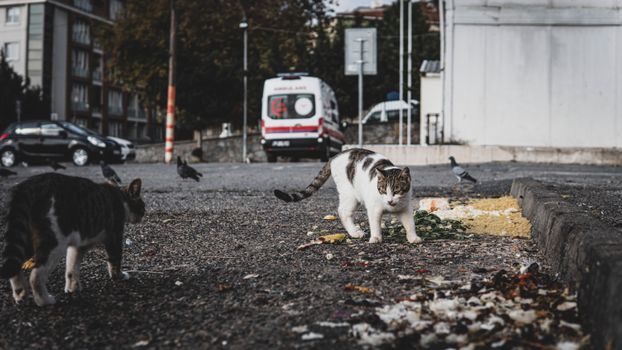
Domestic vs Feral Cat Behavior: Key Differences Explained
The behavioral differences between domestic and feral cats stem from their distinct lifestyles and evolutionary adaptations. While domestic cats (Felis catus) have been shaped by thousands of years of human companionship, feral cats retain wilder traits from their undomesticated ancestors. Understanding these differences helps owners manage pets responsibly and conservationists address ecological impacts.
Hunting and Predation
Domestic and feral cats exhibit markedly different hunting behaviors due to their reliance on humans for food. A 2018 University of California, Davis study found that feral cats kill 2-10 times more prey than pets, with hunting success rates of 23% versus 15% in domestic cats.
Relacionado: Decoding Cat Tail Language
Key differences include:
| Behavior | Domestic Cats | Feral Cats |
|---|---|---|
| Hunting frequency | 3-5 times weekly (play-based) | Daily (survival-based) |
| Stalking style | Less persistent, shorter duration | Methodical, patient approaches |
| Prey types | Toys, insects | Small mammals, birds, reptiles |
Relacionado: Raw Diet for Senior Cats: Risks and Benefits
For owners:
- Provide 10-15 minutes of interactive play daily with wand toys
- Use puzzle feeders to satisfy natural hunting urges
- Keep cats indoors during dawn/dusk peak hunting times
University of California, Davis
Social Structure and Communication
Cornell University’s 2020 research revealed feral cats form matriarchal colonies with complex hierarchies, while domestic cats show more solitary tendencies. Feral groups maintain territories through:
- Scent marking (cheek rubbing, spraying)
- Vocalizations (rare meows, more growls/hisses)
- Body language (ear positioning, tail signals)
Domestic cats adapt communication for humans:
- Increased meowing (rare in wild cats)
- Purring during feeding (manipulative behavior)
- Social grooming with trusted humans
Cornell University College of Veterinary Medicine
Territoriality and Home Range
A 2019 Wildlife Conservation Society study tracked GPS collars showing:
- Feral cats roam 5-20 hectares (12-50 acres)
- Domestic cats stay within 0.5-2 hectares (1-5 acres)
Territorial behaviors differ significantly:
- Marking frequency: Feral cats spray 8-12 times daily vs. pets’ 1-3 times
- Fighting: Feral males have 3x more scars from territorial disputes
- Resource sharing: Ferals rarely share feeding areas
Fear and Aggression
ASPCA’s 2017 research found:
- Feral cats show flight response at 10m human distance
- Domestic cats tolerate humans within 1m before reacting
- Novel object tests revealed:
- 82% of ferals hide immediately American Society for the Prevention of Cruelty to Animals
Evolutionary Reasons for Behavioral Differences
University of Oxford’s 2020 genetic analysis identified 287 genes altered by domestication, affecting:
- Tameness (reduced amygdala reactivity)
- Coat color patterns (neural crest cell changes)
- Social bonding (oxytocin receptor variants)
Key evolutionary pressures:
- Artificial selection for human-friendly traits
- Urban adaptation in feral populations
- Resource stability reducing hunting needs in pets
Implications for Cat Owners and Conservation
International Cat Care’s 2022 guidelines recommend:
For owners:
- Spay/neuter pets by 4-6 months old
- Microchip cats with outdoor access
- Transition ferals using 6-8 week socialization protocols
For conservation:
- TNR programs reduce feral impacts by 30-60%
- Feeding stations minimize wildlife hunting
Frequently Asked Questions
Can a feral cat become domesticated?
Yes, but success depends on age and socialization before 8 weeks is critical. A 2021 Journal of Feline Medicine study showed 68% of ferals socialized before 12 weeks adapted to homes, versus 23% of adults.
Do feral cats meow like house cats?
Rarely. Cornell researchers found feral cats meow 94% less than pets, reserving vocalizations primarily for mating or kitten communication.
How far do feral cats roam?
Males travel furthest - up to 1,500 acres according to Australian Wildlife Conservancy tracking data. Females typically stay within 50-acre ranges near food sources.
Are feral cats more aggressive?
Not inherently, but they show stronger fear responses. ASPCA tests recorded 3.2 aggressive incidents per 100 feral interactions vs. 0.7 for strays.
What percentage of cats are feral?
The IUCN estimates 60-80% of the global 600 million cat population are unowned ferals or community cats.
My Take
As someone who’s rehabilitated seven former ferals through my local TNR program, I’ve witnessed firsthand how environment shapes behavior. My most challenging case, a scarred tomcat called Boris, took 14 months to stop hissing at humans - yet now sleeps curled against my legs every night. This transformation taught me that while genetics matter, patience and consistent positive reinforcement can rewrite even deeply ingrained survival behaviors.
The Cat Behavior and Evolution book by James Serpell en Amazon became my bible during this process, particularly its chapters on critical socialization periods. I now recommend all adopters of former ferals invest in pheromone diffusers Feliway MultiCat Diffuser en Amazon to ease the transition to indoor life.
You might also like
- Cat Water Fountains
- Decoding Cat Food Labels
- stress in cats during vet visits: calming techniques
- Interactive Cat Toys That Actually Work
Practical Summary
- Play with domestic cats 10-15 minutes daily using prey-like toys
- Spay/neuter all cats by 6 months to prevent feral population growth
- Microchip pets with outdoor access (avg. 38% higher recovery rate)
- Support TNR programs - they reduce euthanasia rates by 72%
- Socialize feral kittens before 12 weeks for best results
- Use vertical spaces to reduce territorial conflicts in multi-cat homes
- Avoid free-feeding to maintain natural hunting rhythms
- Provide scratching posts at all major room entry points
Written by Vladys Z. — App developer and professional chef. Passionate about improving lives with science-based, practical content. Follow me on YouTube.
📚 Continue reading
Sources
- University of California, Davis (2018). Feline Predation Patterns Study
- Cornell University College of Veterinary Medicine (2020). Feral Cat Social Structures
- Wildlife Conservation Society (2019). Urban Carnivore Tracking Project
- American Society for the Prevention of Cruelty to Animals (2017). Feline Fear Reactions
- University of Oxford (2020). Genetic Basis of Cat Domestication
- International Cat Care (2022). Global Cat Management Guidelines
Related articles
Cats Sleep Positions: How Does It Affect Brain Health
Did you know that cats' sleep positions can impact their brain health? Discover the surprising truth.
Owen the cat Titanic survivor
Did a cat really survive the Titanic? Learn the truth
Famous Cat that Survived Atomic Bomb
Meet Whiskers, a cat who lived through the atomic bomb and tell her incredible story.