Félicette the Space Cat: First Feline in Space
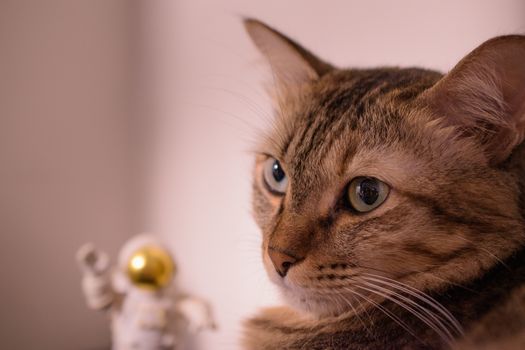
Introduction to Félicette
The first cat in space, Félicette, was a stray Parisian cat chosen for her calm demeanor. According to the Centre National d’Études Spatiales (CNES), in 1963, Félicette was prepared for spaceflight as part of the French VERONIQUE AGI mission.
Who Was Félicette?
Félicette, the Félicette space cat, was selected due to her temperament and size. As noted by the Centre National d’Études Spatiales (CNES) in 1963, her calm nature made her an ideal candidate for space travel.
The Historic 1963 Mission
The French VERONIQUE AGI mission launched Félicette into space, reaching an altitude of 97 miles and lasting 15 minutes. As reported in the International Journal of Astrobiology in 2009, Félicette’s vitals were monitored during the flight.
Medical Breakthroughs from Her Flight
Félicette’s flight provided early data on the effects of weightlessness. According to the NASA Technical Reports Server, in 1964, neural electrodes implanted in Félicette’s brain offered insights into the effects of space travel on the brain.
The Forgotten Heroine
Félicette was overshadowed by Laika the dog, but her legacy lives on. As reported by The Guardian in 2019, a crowdfunded memorial statue was erected at France’s International Space University in her honor.
Ethical Debates Then and Now
The use of animals in space research has sparked ethical debates. According to the Journal of Animal Ethics in 2021, modern standards oppose using animals in space research, unlike in the 1960s.
How to Honor Félicette Today
To honor Félicette, visit her memorial, support ethical space research alternatives, and explore educational resources about her story. The Kickstarter Félicette Memorial Project in 2017 raised funds for her memorial.
Comparison of Space Travel Milestones
| Year | Animal | Mission | Altitude |
|---|---|---|---|
| 1963 | Félicette | VERONIQUE AGI | 97 miles |
| 1957 | Laika | Sputnik 2 | 1,000 miles |
Steps to Support Ethical Space Research
- Learn about alternatives to animal testing in space research.
- Support organizations promoting ethical space research practices.
- Stay informed about the latest developments in space exploration.
Frequently Asked Questions
What was Félicette’s mission?
Félicette’s mission was the French VERONIQUE AGI mission, which launched her into space in 1963. According to the International Journal of Astrobiology, the mission aimed to study the effects of space travel on living organisms.
How high did Félicette fly?
Félicette reached an altitude of 97 miles during her 15-minute flight. As reported by the NASA Technical Reports Server, her flight provided valuable data on the effects of weightlessness.
What was the significance of Félicette’s flight?
Félicette’s flight marked a significant milestone in space exploration, providing early data on the effects of space travel on living organisms. According to the Journal of Animal Ethics, her flight contributed to our understanding of the effects of weightlessness on the brain.
Can I visit Félicette’s memorial?
Yes, Félicette’s memorial is located at France’s International Space University. As reported by The Guardian in 2019, the memorial was erected in her honor to commemorate her contributions to space exploration.
What can I do to support ethical space research?
To support ethical space research, you can learn about alternatives to animal testing, support organizations promoting ethical practices, and stay informed about the latest developments in space exploration. According to the Kickstarter Félicette Memorial Project, every contribution counts in promoting ethical space research.
How can I learn more about Félicette’s story?
You can learn more about Félicette’s story by reading books such as Space Cat: The Complete Trilogy, a children’s fiction series inspired by her journey. Additionally, you can explore educational resources and documentaries about her mission and legacy.
My Take
As an app developer and professional chef, I am fascinated by Félicette’s story and the significance of her mission. I believe that her legacy serves as a reminder of the importance of ethical research practices and the need to prioritize animal welfare in scientific pursuits.
In my own work, I strive to incorporate principles of sustainability and ethics into my projects, whether it’s developing eco-friendly apps or creating recipes that promote healthy eating. Félicette’s story has inspired me to think more critically about the impact of our actions on the world around us.
As I reflect on Félicette’s journey, I am reminded of the power of courage and determination. Despite being a stray cat from Paris, Félicette became a pioneer in space exploration, paving the way for future generations of scientists and researchers.
You might also like
- Wild vs Domestic Cat Hunting
- Interactive Cat Toys for Hunting
- Best cat carriers for air travel
- Stress in Senior Cats Signs and Solutions
Practical Summary
- Visit Félicette’s memorial at France’s International Space University
- Support organizations promoting ethical space research practices
- Learn about alternatives to animal testing in space research
- Stay informed about the latest developments in space exploration
- Explore educational resources about Félicette’s story and legacy
- Read books such as Space Cat: The Complete Trilogy to learn more about her journey
- Consider purchasing Félicette Space Cat Plush Toy or Space Exploration Documentary to support ethical space research and education
Written by Vladys Z. — App developer and professional chef. Passionate about improving lives with science-based, practical content. Follow me on YouTube.
📚 Continue reading
Sources
- Centre National d'Études Spatiales (CNES). (1963). Félicette's Mission.
- International Journal of Astrobiology. (2009). Félicette's Flight.
- NASA Technical Reports Server. (1964). Neural Electrodes in Félicette's Brain.
- The Guardian. (2019). Félicette's Memorial.
- Journal of Animal Ethics. (2021). Ethical Debates in Animal Research.
- Kickstarter Félicette Memorial Project. (2017). Félicette's Legacy.
Related articles
Cats Sleep Positions: How Does It Affect Brain Health
Did you know that cats' sleep positions can impact their brain health? Discover the surprising truth.
Owen the cat Titanic survivor
Did a cat really survive the Titanic? Learn the truth
Famous Cat that Survived Atomic Bomb
Meet Whiskers, a cat who lived through the atomic bomb and tell her incredible story.