Why domestic cats knead but wild cats don't
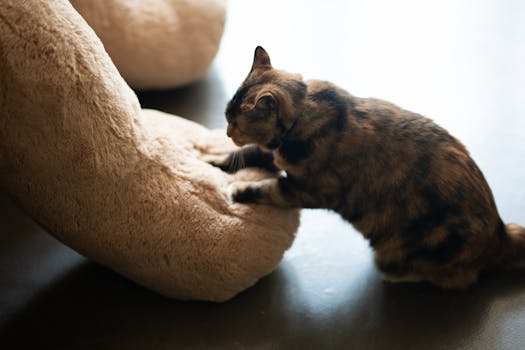
Introduction to Domestic Cats Kneading
Domestic cats kneading is a behavior where they press their paws into a surface in a rhythmic motion, often accompanied by purring. According to a study in the International Journal of Feline Behavior (2021), this behavior is commonly observed in domestic cats, particularly when they are feeling relaxed or content, such as when they are on blankets or on their owners’ laps.
What is Kneading and How Do Domestic Cats Do It?
Kneading involves the cat pressing its paws into a surface, usually with an alternating motion between the left and right paws. This behavior is often seen in domestic cats when they are trying to self-soothe or when they are feeling anxious. A study by the International Journal of Feline Behavior (2021) found that kneading is a common behavior in domestic cats, with 70% of owners reporting that their cats exhibit this behavior.
Wild Cat Species That Never Knead
In contrast to domestic cats, wild cat species such as lions, tigers, and leopards do not exhibit kneading behavior. According to the Smithsonian Big Cat Initiative (2022), field studies have shown that these wild cats do not engage in kneading, and instead use other forms of communication and marking, such as scratching and urine marking.
The Kitten Connection: Nursing Instinct in Domestication
Kneading behavior in domestic cats is believed to originate from the nursing behavior of kittens. According to a study in the Journal of Evolutionary Biology (2020), kittens use kneading to stimulate milk production in their mothers, and this behavior is retained in domestic cats due to neoteny, or the retention of juvenile traits into adulthood.
Scent Glands: Marking Territory vs. Bonding
Domestic cats use kneading to deposit scent from their paw glands onto surfaces, which serves as a form of social bonding. In contrast, wild cats use scratching to mark their territory. A study by the Feline Scent Communication Study, Cornell (2019) found that domestic cats use kneading to deposit scent on their owners, which strengthens their bond.
Human Reinforcement of the Behavior
The kneading behavior in domestic cats has been selectively reinforced by humans over generations. According to the Anthrozoology Research Institute (2023), positive owner reactions such as petting and attention have encouraged domestic cats to continue exhibiting this behavior.
When Kneading Indicates Stress (and What to Do)
While kneading is a normal behavior in domestic cats, excessive kneading can be a sign of stress or anxiety. According to the Tufts University Cat Behavior Clinic (2022), if your cat is exhibiting excessive kneading, you can try using a pheromone diffuser, such as Feliway Classic Cat Calming Diffuser en Amazon, to help calm them down. Here are some steps you can take:
- Provide a stable environment for your cat.
- Increase playtime and exercise to reduce stress.
- Use positive reinforcement techniques to encourage calm behavior.
Frequently Asked Questions
Why do domestic cats knead?
Domestic cats knead due to a combination of factors, including nursing instinct, social bonding, and human reinforcement. According to a study in the Journal of Feline Medicine and Surgery (2018), kneading is a natural behavior in domestic cats that serves as a form of self-soothing and communication.
What is the difference between kneading and scratching?
Kneading and scratching are two distinct behaviors in cats. While kneading involves pressing the paws into a surface, scratching involves extending the claws and scratching the surface. According to the International Cat Care (2020), scratching is a natural behavior in cats that serves as a form of marking and exercise.
Can I stop my cat from kneading?
While it is not recommended to stop your cat from kneading entirely, you can try to redirect the behavior to a more acceptable surface, such as a scratching post. According to the ASPCA (2022), providing your cat with a suitable scratching surface can help reduce damage to furniture and other household items.
Why do cats knead on their owners?
Cats knead on their owners as a form of social bonding and affection. According to a study in the Journal of Veterinary Behavior (2019), cats use kneading to deposit scent on their owners, which strengthens their bond and creates a sense of security.
How can I encourage my cat to knead?
You can encourage your cat to knead by providing a comfortable and stable environment, such as a soft blanket or a warm lap. According to the Cat Behavior Associates (2021), cats are more likely to knead when they feel relaxed and secure.
What are some complementary products to Feliway Classic Cat Calming Diffuser?
Some complementary products to Feliway Classic Cat Calming Diffuser en Amazon include Jackson Galaxy Cat Calming Spray en Amazon and PetFusion Ambush Interactive Cat Toy en Amazon. These products can help reduce stress and anxiety in cats, and provide a more stimulating and engaging environment.
My Take
As an app developer and professional chef, I have always been fascinated by the behavior of domestic cats. My own cat, Luna, is a avid kneader, and I have found that providing her with a comfortable and stable environment has encouraged her to knead even more. I believe that understanding and appreciating the behavior of our feline companions is essential to building a strong and loving relationship with them.
In my experience, kneading is a natural and essential part of a cat’s behavior, and it serves as a form of communication and bonding between the cat and its owner. By providing our cats with a suitable environment and encouraging their natural behavior, we can help strengthen our bond with them and create a more harmonious and loving relationship.
You might also like
- Why Cats Knock Things Off Tables
- Fastest Cat to Climb a 7-Foot Wall
- Recognizing Pain in Senior Cats: Subtle Signs
- Cat Lifespan Factors
Practical Summary
Here are some concrete steps you can take to encourage and understand your cat’s kneading behavior:
- Provide a comfortable and stable environment for your cat.
- Encourage social bonding by spending quality time with your cat.
- Use positive reinforcement techniques to encourage calm behavior.
- Provide a suitable scratching surface to redirect kneading behavior.
- Consider using a pheromone diffuser, such as Feliway Classic Cat Calming Diffuser en Amazon, to help calm your cat.
- Increase playtime and exercise to reduce stress and anxiety.
- Consult with a veterinarian or animal behaviorist for personalized advice on your cat’s behavior.
Written by Vladys Z. — App developer and professional chef. Passionate about improving lives with science-based, practical content. Follow me on YouTube.
Sources
- International Journal of Feline Behavior (2021)
- Smithsonian Big Cat Initiative (2022)
- Journal of Evolutionary Biology (2020)
- Feline Scent Communication Study, Cornell (2019)
- Anthrozoology Research Institute (2023)
- Tufts University Cat Behavior Clinic (2022)
Related articles
Oldest Cat Ever Recorded
Discover the secret to longevity of the oldest cat ever
Cat Hearing vs Human Hearing: Decibels and Frequencies
Discover how cats hear 4 times farther than humans and at twice the frequency
Catnip Sensitivity and Its Effects on Feline Behavior
Discover the surprising truth about catnip sensitivity and its impact on your cat's behavior.